

Baby gas: why it occurs and how to relieve discomfort
Date: 30.10.2025

The first months of a baby’s life are a time of discovery and adaptation. The baby gets used to the new world, and parents learn to understand every movement and sound. One of the most common challenges during this period is baby gas — a natural phenomenon that can cause fussiness and discomfort.
Why baby gas occurs
The newborn’s digestive system is still developing, so the tummy reacts even to the smallest changes. Gas is the result of swallowed air or temporary imbalance of the gut microbiota.
Main causes of gas:
- Swallowing air during feeding: If the baby feeds too quickly or is not latched properly, air enters the stomach.
- Immature digestive system: In the first weeks, enzymes do not yet work in coordination.
- Changes in the mother’s diet: Some foods can affect the baby’s digestion.
- Rushing after feeding: If the baby does not burp, air may remain in the stomach.
Tip for parents: Feed your baby in a calm atmosphere — avoid loud noises, bright lights, and hurry. The mother’s calmness is transmitted to the baby, helping digestion work rhythmically.
How to recognize if your baby has gas
Even without words, the baby clearly shows discomfort.
Typical signs:
- Pulling legs up to the tummy
- Crying during or after feeding
- Stomach rumbling or gurgling
- Restless sleep, frequent waking
- Reddened face or tensed body
These signals are not a cause for panic but a hint: the baby needs care and a few simple actions that bring comfort.
5 simple steps for a calm tummy
- Hold the baby upright after feeding. This helps air exit naturally.
- Give a gentle tummy massage. Circular movements with the palm clockwise — a few minutes of gentle contact.
- Use the “tummy to tummy” position. The warmth and rhythm of your breathing soothe the baby.
- Check feeding technique. The baby should latch tightly to reduce air swallowing.
- Pay attention to clothing and temperature. Nothing should press on the tummy.
Additional digestive support
Sometimes gas can appear regularly even with correct feeding. In such cases, parents look for ways to gently support natural digestive processes.
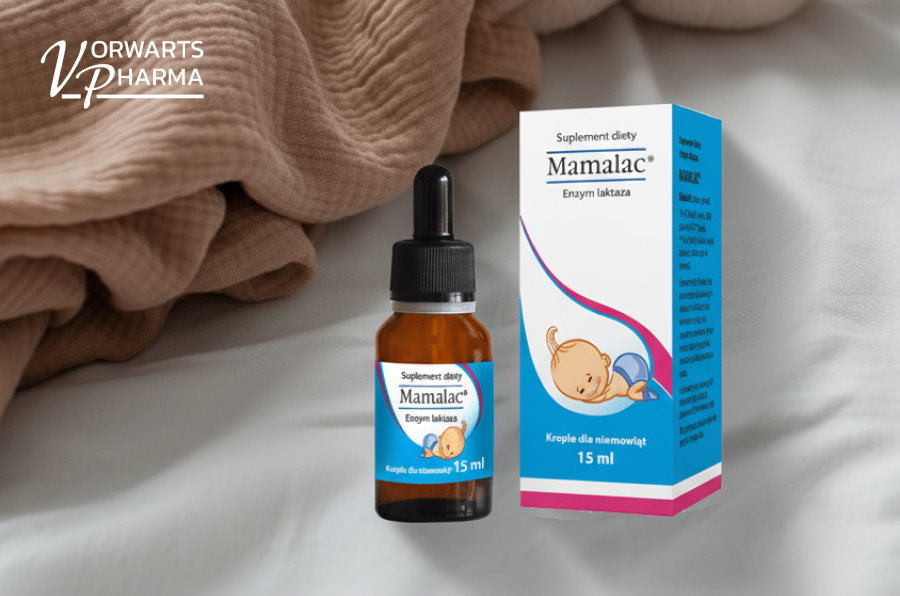
One option is a high-quality dietary supplement for infants — Mamalac drops by Vorwarts Pharma.
Mamalac drops:
- Help reduce gas accumulation
- Support better digestion of milk or formula
- Maintain the natural balance of gut microbiota
The formula is created according to European quality standards, considering the needs of the youngest. Free from dyes, flavors, and alcohol — just care in every drop.
Care that starts with attention
Baby gas is not a disease but a temporary developmental stage.
Over time, the digestive system matures, and the baby becomes calmer.
The key is to be present, listen, touch, and speak gently.
Vorwarts Pharma believes true care starts with attention — in every touch, every glance, every drop.
Frequently Asked Questions (FAQ)
How long does the baby gas period last?Typically, gas in newborns occurs until three to four months, when the digestive system becomes more mature and coordinated.
How often can tummy massage be done?A light massage is recommended 1–2 times a day, in a calm atmosphere, when the baby is neither hungry nor just fed.
Can dietary supplements be used for baby gas?Yes, if the product is specially designed for infants, meets quality and safety standards, like Mamalac drops by Vorwarts Pharma, which support natural digestive processes.
Learn also:Foremilk and hindmilk: how to ensure breastfeeding harmony
More about products for the youngest — on the official Vorwarts Pharma website.
See also



111


