

How dry air affects the nasal and throat mucosa
Date: 06.03.2026

Dry air with humidity below 40% gradually reduces the natural moisture of the nasal and throat mucosa. As a result, dryness in the nose, throat irritation, a feeling of tightness, and the need to drink water more often may appear. This most often occurs in winter, spring, or during active use of air conditioning.
The mucous membrane comes into contact every day with the air we breathe. It reacts even to small changes in the indoor microclimate. If the humidity in an apartment drops to 20–30%, discomfort appears faster than expected.
Doctors often note that dry indoor air is one of the main causes of throat dryness complaints during winter.
“When humidity decreases, the mucous membrane loses part of its natural protection, and a person begins to feel irritation,” note microclimate specialists.
Interestingly, in modern energy-efficient buildings the problem may be more noticeable. Airtight windows retain heat but limit air exchange. Without regular ventilation, nasal dryness becomes common.
What humidity level is considered normal indoors
Humidity of 40–60% is considered optimal. At this level the nasal and throat mucosa maintain natural comfort.
| Humidity level | What a person feels |
| 20–30% | Dry nose, throat irritation |
| 30–40% | Periodic discomfort |
| 40–60% | Comfortable sensations |
| above 60% | Feeling of heavy air |
According to indoor climate studies, people spend up to 90% of their time indoors. Therefore, dry air in an apartment or office affects well-being daily, even if we do not notice it immediately.
Why air conditioning and heating increase dryness
Heating systems warm the air but do not add moisture. Air conditioners also reduce humidity while cooling. As a result, throat dryness may appear, especially after long periods indoors.
“If a person often feels nasal dryness without other reasons, it is worth checking the humidity level in the room,” advise air hygiene specialists.
What to do if the nose and throat feel dry
- Check humidity using a hygrometer.
- Ventilate the room regularly.
- Use a humidifier.
- Maintain sufficient water intake.
- Add products for mucosal care during periods of dry air.
These steps help reduce unpleasant sensations and maintain comfort during the day.
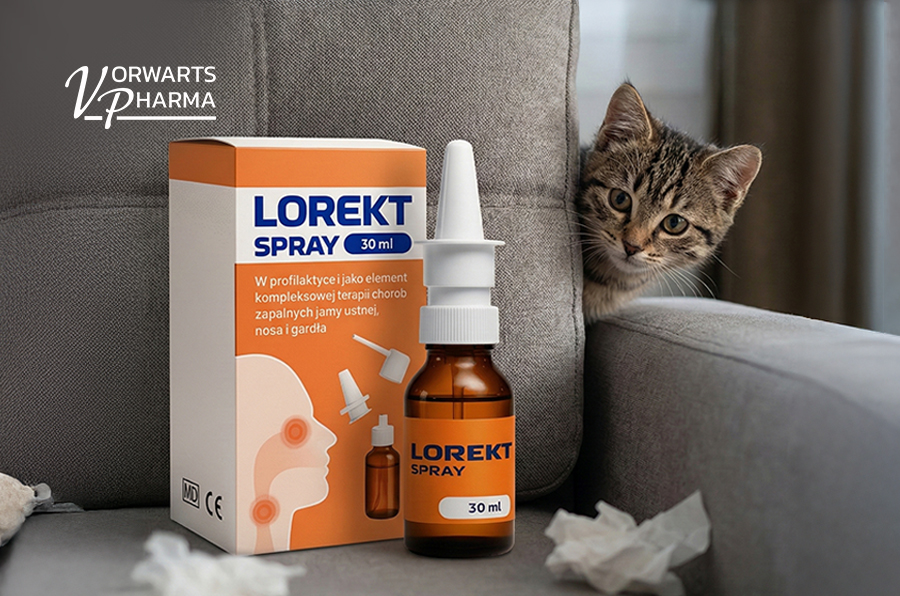
Lorekt for dryness in the nose and throat
During periods when the air is dry, it may be useful to consider products for daily care. Lorekt by Vorwarts Pharma is designed for contact with the nasal and throat mucosa under such conditions.
The formula contains fish oil treated with sodium chloride. During the process, carbonyl compounds are formed, providing a local antiseptic effect. The formula also includes vitamins A, E, and D₃ in emulsion form. The spray is equipped with two interchangeable nozzles and is approved for children from 1 year of age.
More information about Lorect for the nasal and throat mucosa is available on the official page:
https://vorwartspharma.pl/en/product/lorekt-en/
Other company solutions are presented on the Vorwarts Pharma website:
https://vorwartspharma.pl/en/
Dry air affects the mucosa gradually. Controlling humidity and regular care help maintain comfort in everyday life. If dryness in the nose or throat occurs frequently indoors, it is worth paying attention to the indoor climate and choosing appropriate products for daily use.
FAQ
Why does the nose become dry in winter?
Due to heating, indoor humidity may drop to 20–30%, which causes mucosal dryness.
What humidity should be in an apartment?
The optimal level is 40–60%.
Can air conditioning cause throat dryness?
Yes, prolonged use of air conditioning reduces air humidity.
What helps with nasal dryness?
Indoor climate control and mucosal care products, including Lorekt, which is used during periods of dry air.
111


