

How to Fall Asleep Faster When Insomnia Keeps You Awake
Date: 06.07.2026

Have you been lying awake for an hour with your eyes wide open? Your thoughts keep racing, your body feels tense, and sleep just won’t come. This is a familiar experience for millions of people. Let’s look at why insomnia occurs and what can actually help you fall asleep more quickly.
Why Is It Hard to Fall Asleep? Common Causes
Insomnia rarely happens without a reason. In most cases, it is linked to one or more of the following factors:
- Chronic stress and anxiety. The nervous system remains in a heightened state of alertness, and the brain doesn’t “switch off” even at night.
- Disrupted circadian rhythm. Late-night screen time, an irregular schedule, or daytime naps can shift your internal body clock.
- Elevated evening cortisol levels. Normally, cortisol decreases in the evening. Under stress, it may remain elevated, making it harder to fall asleep.
- Magnesium or vitamin B6 deficiency. These nutrients play a role in melatonin production and the normal functioning of the nervous system.
- Behavioral triggers: caffeine after 2:00 p.m., heavy meals before bedtime, or intense evening exercise.
What Helps You Fall Asleep Faster? Proven Methods
The 4-7-8 Breathing Technique
Inhale for 4 seconds, hold your breath for 7 seconds, and exhale for 8 seconds. This technique activates the parasympathetic nervous system and helps slow your heart rate. Many people notice a calming effect after just 2–3 breathing cycles.
Cool Down Your Body
Your body temperature naturally drops before sleep. Taking a cool shower or keeping your bedroom at 18–19°C (64–66°F) can support this process and help you fall asleep more easily.
Don’t Stay in Bed Awake
If you haven’t fallen asleep after 20 minutes or more, get out of bed. Do something calm and repetitive under dim lighting. This helps reinforce the association that “bed = sleep” rather than “bed = stress or frustration.”
Reduce Blue Light Exposure
Blue light from screens suppresses melatonin production. Try to avoid screens for 1–2 hours before bedtime, or use blue-light-filtering glasses if screen use is unavoidable.
What Helps You Fall Asleep Faster—and What Gets in the Way
| Helps You Fall Asleep | Makes It Harder to Fall Asleep |
| A consistent bedtime | An irregular sleep schedule |
| A cool bedroom (18–19°C) | Heat or poor ventilation |
| Breathing exercises | Scrolling through social media in bed |
| Avoiding caffeine after 2:00 p.m. | Caffeine in the afternoon or evening |
| A calming bedtime routine | Emotional conversations or conflicts before bed |
| Supporting the nervous system | Chronic unmanaged stress |
When Sleep Tips Aren’t Enough: The Role of Stress and the Nervous System
If insomnia is stress-related, improving sleep hygiene alone may not be enough. Chronic stress keeps the sympathetic nervous system overactivated, and no bedtime routine can fully compensate for that.
In such cases, it’s important not only to optimize your sleep environment but also to reduce your overall level of stress and emotional tension.
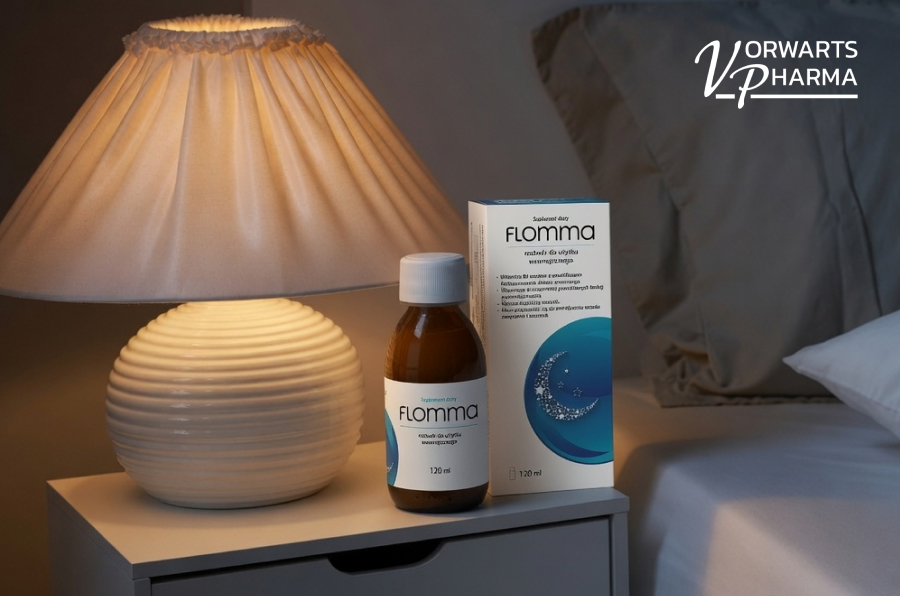
Flomma – A Dietary Supplement with Two Key Ingredients
Flomma contains:
- Lactium® HD4 (milk protein hydrolysate).
- Vitamin B6 (pyridoxine), which:
- contributes to the normal functioning of the nervous system;
- helps reduce tiredness and fatigue;
- supports the regulation of hormonal activity;
- contributes to normal psychological function.
An important advantage of Flomma is that it does not cause dependence, sedation, or memory impairment, does not reduce concentration, and is suitable for people with lactose intolerance (it contains less than 1% lactose).
It is recommended to take 1–2 hours before bedtime for a 24-day course. Flomma is suitable for adults and children aged 3 years and older.
FAQ
What should I do if I can’t fall asleep because of racing thoughts?
Try the “brain dump” technique—write down all your worries on paper before going to bed. This can help your brain let go of them instead of replaying them over and over. Pair it with the 4-7-8 breathing technique for additional relaxation.
How long does it take to improve sleep?
For mild sleep disturbances, a consistent sleep schedule may improve sleep within 1–2 weeks. Stress-related insomnia often takes longer because the underlying nervous system imbalance also needs to be addressed.
What is Flomma and how should it be taken for insomnia?
Flomma is a dietary supplement containing Lactium® HD4 and vitamin B6, which help reduce emotional tension and support better sleep quality. Adults are recommended to take 10 ml once daily, 1–2 hours before bedtime, for a 24-day course. For more information, please visit the Flomma product page.
Keywords: how to fall asleep faster, insomnia, what helps with insomnia, sleep problems, nervous system support
111


