

Why Does a Baby’s Stomach Gurgle After Feeding?
Date: 05.10.2026

Your baby has just finished feeding, is lying quietly in your arms or starting to fall asleep — and suddenly you hear gurgling, bubbling or surprisingly loud rumbling from their tummy. During the first months of life, these sounds can easily catch a parent’s attention. Why does a baby’s stomach gurgle after feeding, and does it always mean gas? In many cases, the sounds are linked to the natural movement of milk, fluids and gas through the intestines. Still, it is worth looking at your baby’s overall behaviour rather than focusing on the sound alone.
Why does my baby’s stomach gurgle?
Stomach gurgling, bubbling and tummy rumbling in babies are often connected with normal intestinal activity after a feed. Milk moves through the digestive tract, while fluids and small pockets of gas move with it.
This can make a baby’s tummy sound surprisingly noisy, especially after breastfeeding or formula feeding.
The sound itself does not identify the cause. What matters more is how the baby behaves after feeding and whether any other changes appear.
Common causes of stomach gurgling after feeding
Milk moving through the intestines
After breast milk or formula enters the digestive tract, the intestines begin moving their contents forward. These rhythmic contractions are called peristalsis.
As milk, fluid and gas move through the intestines, they may create gurgling, bubbling or rumbling sounds in a baby’s stomach.
Swallowing air during feeding
Babies can swallow air along with milk. This can happen during both breastfeeding and bottle feeding.
For this reason, gas in babies after feeding may occur together with burping, tummy noises or a feeling of fullness.
If your baby regularly becomes unsettled after feeds, it may be useful to look at their latch, feeding position and, when bottle feeding, how quickly the milk flows from the teat.
You can read more about a baby’s behaviour and the signals they give adults in the article “How to Understand a Newborn: Early Signs of Discomfort and How to Respond”.
The baby gut microbiome in the first months
The first months of life are also a period when the newborn gut microbiome is still developing. Its composition changes gradually and can be influenced by factors such as feeding type and the baby’s environment.
You can read more about this process in the article “Newborn Gut Microbiome: How It Develops During the First Months of Life”.
Why does my baby’s tummy rumble or gurgle?
| Possible reason | What happens? | What to watch for |
| Normal intestinal movement | Milk, fluids and gas move through the intestines after feeding | Occasional tummy sounds can occur after feeds |
| Swallowed air | The baby may take in air while breastfeeding or bottle feeding | Gurgling, burping and gas after feeding |
| Gas in the intestines | Gas bubbles move through the bowel and create characteristic sounds | Rumbling may occur together with a bloated or tense tummy |
| Early digestive development | The digestive system and gut microbiome are still adapting during the first months | Tummy noises may appear periodically after feeding |
| Incomplete lactose digestion | Lactose needs the enzyme lactase to be broken down | Look at the overall picture, including gas, bloating and stool changes |
Can lactose cause stomach gurgling in babies?
Lactose is the natural sugar found in breast milk and standard infant formula. The body uses an enzyme called lactase to break it down.
When lactose is not fully digested, it may be associated with symptoms such as gas, bloating and changes in stool.
However, a gurgling stomach after feeding alone does not mean that a baby has lactose intolerance or low lactase activity. Other signs and the baby’s overall condition need to be considered as well.
What should you do if your baby’s stomach gurgles after feeding?
A few simple observations can help:
- check whether the baby is properly latched during breastfeeding;
- when bottle feeding, make sure the baby is not taking in too much air;
- keep the baby upright for a short time after feeding;
- observe their behaviour after feeds;
- pay attention to the frequency and appearance of stools.
If baby tummy rumbling or gurgling is regularly accompanied by repeated vomiting, refusal to feed, marked distress, frequent watery stools or other unusual signs, speak to a paediatrician.
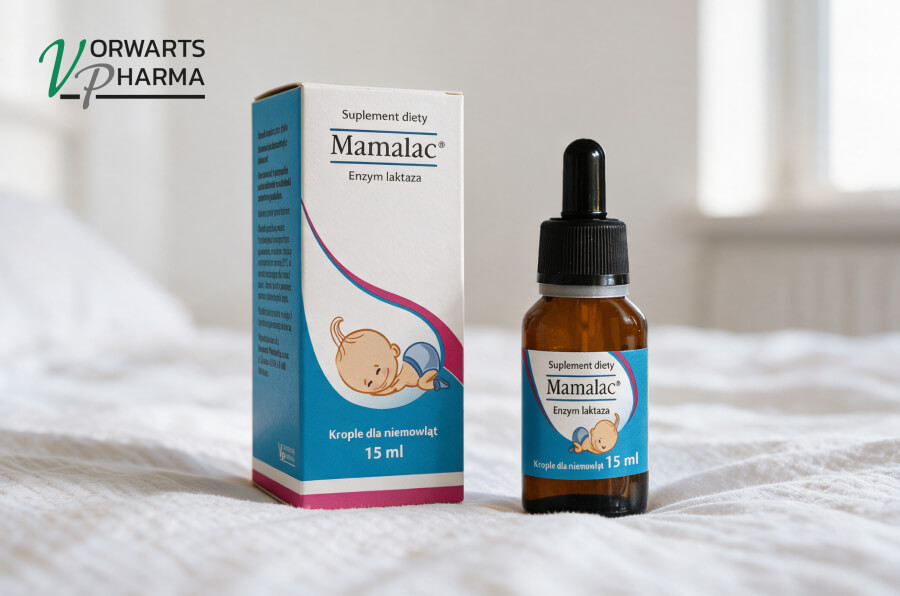
Mamalac Drops with Lactase Enzyme
Mamalac is a dietary supplement in drop form containing the lactase enzyme.
Lactase is the enzyme involved in breaking down lactose, the natural milk sugar found in breast milk and infant formula.
1 ml of the drops contains 3000 FCC units of lactase.
Mamalac should be used according to the information provided on the packaging and the recommended directions for use. The number of drops depends on the feeding volume, so the instructions supplied with the product should be followed.
FAQ: Baby Stomach Gurgling After Feeding
Why does my newborn’s stomach gurgle during feeding?
Possible reasons include the movement of milk, fluid and gas through the intestines as well as air swallowed during sucking.
Why does my baby’s tummy gurgle after breastfeeding?
After feeding, intestinal movement becomes more active. Milk, fluids and gas move through the digestive tract and can create gurgling or rumbling sounds.
Does stomach rumbling mean my baby is lactose intolerant?
No. Tummy rumbling alone is not enough to determine lactose intolerance or low lactase activity. Other symptoms need to be considered.
Are gas and stomach gurgling in babies connected?
They can occur together because moving gas bubbles can create audible gurgling, bubbling and rumbling sounds in the intestines.
When should I be concerned about stomach gurgling after feeding?
If the sounds are accompanied by repeated vomiting, refusal to feed, frequent watery stools, marked distress or other unusual symptoms, it is worth discussing them with a paediatrician.
Food supplement. Food supplements should not be used as a substitute for a varied and balanced diet. Read the information on the packaging and the recommended directions for use before use.
111


