

Elevated Homocysteine Levels – What Do They Mean and How Can They Be Managed?
Date: 29.06.2026
Homocysteine is a sulfur-containing amino acid formed during the metabolism of methionine, an amino acid obtained from dietary animal protein. Under normal conditions, its concentration is kept low with the help of B-group vitamins. When these metabolic pathways are impaired, homocysteine accumulates in the bloodstream and becomes an independent risk factor for cardiovascular and nervous system disorders.
Homocysteine Reference Ranges – When Should You Be Concerned?
| Concentration (µmol/L) | Classification |
| < 10 | Normal |
| 10–15 | Mild hyperhomocysteinemia |
| 15–30 | Moderate hyperhomocysteinemia |
| > 30 | Severe hyperhomocysteinemia |
Some laboratories set the upper limit of the normal range at 12 µmol/L, particularly when assessing cardiovascular risk. In pregnant women, values above 8–10 µmol/L should be discussed with a healthcare professional.
Causes of Elevated Homocysteine Levels
The most common causes include deficiencies of B-group vitamins and lifestyle factors, while genetic predisposition is less common.
Nutrient deficiencies:
- Folic acid (Vitamin B₉) – a key cofactor in the remethylation of homocysteine.
- Vitamin B₁₂ – required for folic acid activation.
- Vitamin B₆ – a cofactor in the transsulfuration pathway.
Lifestyle and other factors:
- Smoking and excessive alcohol consumption.
- Hypothyroidism and chronic kidney disease.
- Use of methotrexate, proton pump inhibitors, or metformin.
- MTHFR C677T polymorphism, which reduces the activity of the enzyme responsible for folate metabolism. The TT genotype may increase homocysteine levels by approximately 20–30%.
Symptoms of Elevated Homocysteine
Hyperhomocysteinemia usually does not cause characteristic symptoms and is considered a “silent” risk factor. Symptoms typically appear only when complications develop.
Possible manifestations include:
- Fatigue and difficulty concentrating.
- Headaches and numbness in the limbs.
- At very high concentrations: thrombotic events and visual disturbances.
Testing is recommended as a preventive measure for individuals with a family history of cardiovascular disease, recurrent miscarriages, or long-term use of medications that affect folate metabolism.
How to Reduce Homocysteine Levels
Diet
| Nutrient | Food sources |
| Folic acid | Spinach, broccoli, lentils, asparagus |
| Vitamin B₁₂ | Liver, mackerel, eggs, dairy products |
| Vitamin B₆ | Chicken, brown rice, potatoes, bananas |
| Betaine | Beetroot, spinach, quinoa |
Betaine (trimethylglycine) is a natural methyl donor that supports the remethylation of homocysteine into methionine independently of the folate pathway. This may be particularly important in individuals with an MTHFR polymorphism.
Lifestyle Changes
Quitting smoking and limiting alcohol intake have been shown to help reduce homocysteine concentrations. Regular physical activity also supports healthy amino acid metabolism.
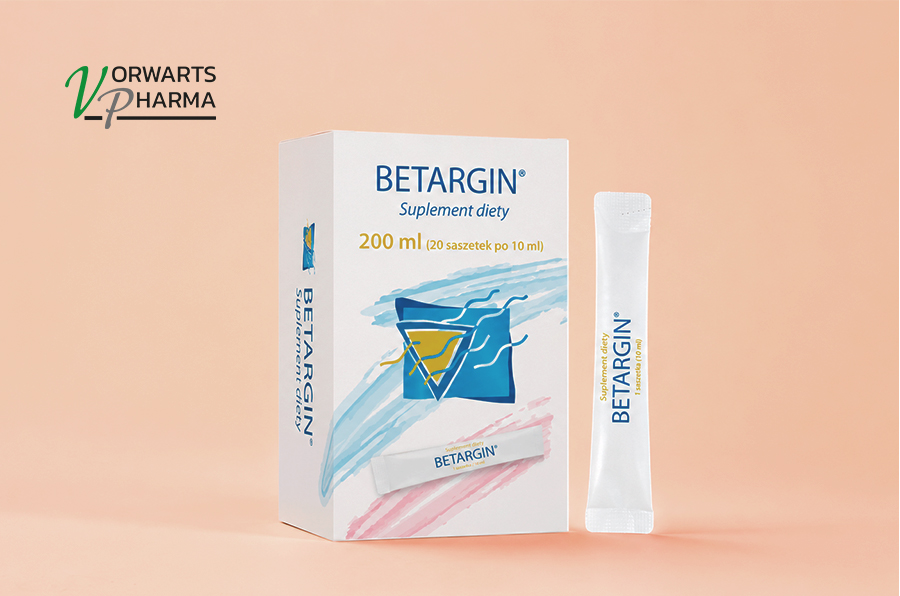
Betargin – Betaine and Arginine in One Product
Betargin is a dietary supplement containing arginine and betaine. The betaine in the product participates in the remethylation of homocysteine by acting as a methyl donor and supporting its conversion into methionine.
Arginine is involved in the urea cycle and nitric oxide synthesis, while citrate ions participate in the Krebs cycle, help reduce acidity, and may alleviate dyspeptic symptoms.
Betargin may be an option to consider for individuals with elevated homocysteine levels associated with betaine deficiency. Detailed information about the ingredients and recommended dosage is available at:
https://vorwartspharma.pl/ua/product/betargin/
FAQ
What is homocysteine, and why are high levels dangerous?
Homocysteine is a sulfur-containing amino acid produced during methionine metabolism. Elevated levels can damage the vascular endothelium, promote blood clot formation, and enhance the harmful effects of LDL cholesterol, making it an independent risk factor for cardiovascular disease.
Which test detects elevated homocysteine?
A fasting venous blood test measuring total plasma homocysteine is used. Results above 15 µmol/L should be discussed with a healthcare professional to determine the underlying cause.
Does the MTHFR polymorphism always increase homocysteine levels?
Not necessarily. However, the TT genotype significantly reduces the activity of the enzyme responsible for folate metabolism. MTHFR testing may be considered in cases of persistent hyperhomocysteinemia that cannot be explained by vitamin deficiencies.
What is Betargin, and what does it contain?
Betargin is a dietary supplement containing arginine and betaine (trimethylglycine). Betaine participates in the remethylation process of homocysteine.
See also



111


