

How to Reduce Emotional Tension After a Busy Day
Date: 19.10.2026
Your workday is officially over, but your mind hasn’t quite caught up. There’s an email you forgot to answer, an important meeting tomorrow, and another notification lighting up your phone. You’re finally home, yet your thoughts are still at work. Sound familiar? How can you unwind after work and relax after a stressful day? Start by slowing things down: finish your work tasks, reduce digital distractions, get some gentle movement, and give yourself time to settle into the evening.
Why Is It Hard to Relax After a Busy Day?
The line between work and personal time has become increasingly blurred. We close our laptops but continue replying to messages. Then come the news, social media, and endless short videos. Even when the working day ends, there’s always something else competing for our attention.
That’s why mental fatigue after work can appear even on days when we haven’t been particularly physically active.
Light also plays a role. As evening approaches, the body’s natural circadian rhythm changes, including the timing of melatonin production. You can explore this topic in more detail in our article “How to Support Natural Melatonin Production for Better Sleep”.
How to Reduce Emotional Tension After Work
You don’t need an elaborate evening routine to leave a busy day behind. A few small habits that fit naturally into your schedule are often easier to maintain.
| Evening habit | What you can do |
| Finish your workday | Write down tomorrow’s tasks and close work-related chats |
| Reduce digital distractions | Avoid switching directly from work to news or social media |
| Get some gentle movement | Go for a short walk or do some light stretching |
| Dim the lights | Choose softer lighting as bedtime approaches |
| Create a relaxing ritual | Take a shower, read a book, or listen to music |
| Put your phone aside | Spend part of the evening without constant notifications |
An evening wind-down routine doesn’t have to take an hour. Even a simple sequence, such as a shower, a cup of tea, a book, and bedtime, can gradually become a familiar way to end your day.
How to Switch Off After Work and Stop Thinking About Work
A small transition between working hours and personal time can make a difference.
For example, walk the last part of your journey home, change into comfortable clothes, put your laptop away, or spend ten minutes without checking your phone.
Another useful habit is writing a to-do list for tomorrow. Once unfinished tasks are on paper, you no longer need to keep mentally reminding yourself about every detail.
Checking work emails right before bed, on the other hand, can bring all those thoughts back. One message can quickly turn into a chain of questions: Who needs a reply? What should I prepare? What can’t I forget tomorrow?
How to Calm Your Mind Before Bed When You Have Too Many Thoughts
After an emotionally demanding day, trying to force yourself to stop thinking rarely feels easy. Sometimes it’s better to put those thoughts somewhere else, such as a notebook.
Try writing down three things:
- What did I leave unfinished today?
- What do I need to do tomorrow?
- What can wait until another time?
Once you’ve written everything down, close your notebook and move on to a quieter activity.
If your thoughts become particularly active once you’re in bed, you’ll find more ideas in our article “How to Fall Asleep Faster When Insomnia Keeps You Awake”.
Flomma as Part of Your Evening Routine
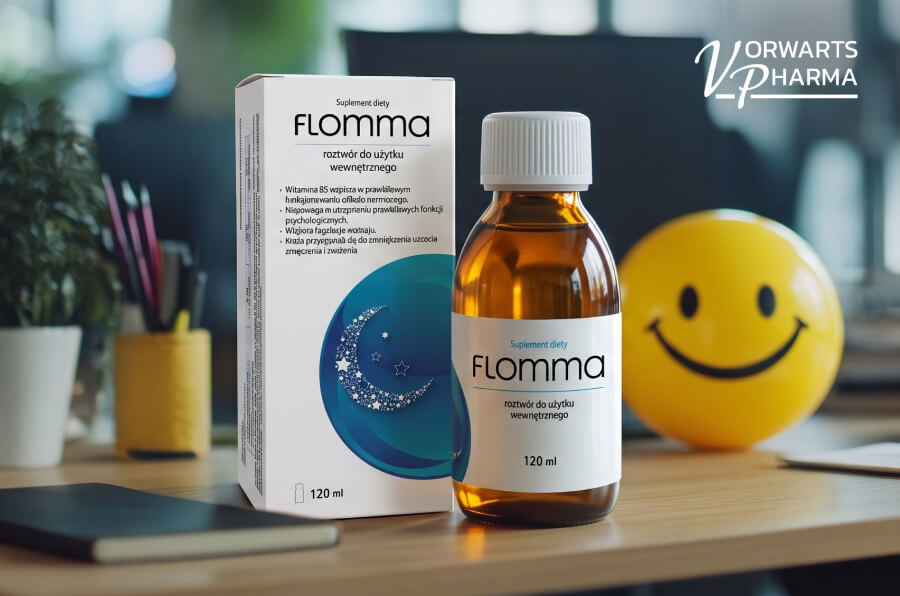
Your regular evening routine can also include Flomma, a dietary supplement from Vorwarts Pharma containing Lactium® HD4, a milk protein hydrolysate, and vitamin B6.
The formula has several distinctive features:
- Contains Lactium® HD4 and vitamin B6.
- Features a milk-derived ingredient.
- Contains less than 1% lactose.
- Can be incorporated into a daily routine according to the manufacturer’s instructions.
Lactium® HD4 is produced from milk protein through a process called hydrolysis, in which proteins are broken down into smaller fragments.
Flomma can be included alongside familiar evening habits, such as reducing screen time, dimming the lights, and maintaining a consistent bedtime.
For more information about the ingredients, recommended intake, and available packaging, visit the Flomma product page.
How to Decompress After a Long Day: A Simple Evening Routine
Start by wrapping up your work and writing down tomorrow’s priorities. Give yourself some time without work notifications.
Go for a short walk, take a shower, or spend a few minutes doing something you genuinely enjoy. As bedtime approaches, dim the lights and choose a quiet activity that doesn’t require constantly switching your attention.
You don’t have to squeeze ten new habits into one evening. Two or three small actions, repeated regularly, are much easier to make part of everyday life.
FAQ: Frequently Asked Questions
How can I reduce emotional tension after work?
Start by creating a clear end to your workday. Close work chats, write down tomorrow’s tasks, and switch to a different activity. Walking, reading, or spending some time without your phone can help separate work from the rest of your evening.
How can I unwind quickly after a stressful day?
Create a short transition ritual. You might take a walk, change into comfortable clothes, have dinner without checking emails, or enjoy a few minutes of quiet time.
What are some simple ways to relax after work?
Try limiting digital distractions, putting work-related tasks aside, choosing softer lighting, and spending time on an activity you enjoy, such as listening to music or reading.
How do I stop thinking about work at night?
Write down unfinished tasks and decide when you’ll return to them the following day. Then close your notebook and avoid continuing your work planning in bed.
How can I calm my mind before going to sleep?
Reduce incoming information, put your phone away, and allow time for a quiet activity. Reading, taking a shower, or listening to gentle music can become part of a familiar bedtime routine.
What is a good evening wind-down routine?
Choose something that’s easy to repeat. For example, finish work, silence notifications, take a shower, read for 15–20 minutes, and go to bed at approximately the same time each night.
Food supplements should not be used as a substitute for a varied and balanced diet.
111


