

How to Restore a Healthy Sleep Schedule and Reduce Stress
Date: 05.06.2026

Chronic stress and a disrupted sleep schedule create a vicious cycle: anxiety makes it difficult to fall asleep, while sleep deprivation increases anxiety. With every sleepless week, the nervous system becomes more sensitive to stimuli, and the threshold for stress responses decreases. Breaking out of this cycle is possible if you take a systematic approach—working on both sleep habits and stress levels simultaneously, rather than simply “going to bed earlier.”
Why Stress Disrupts Sleep
During stress, the body produces cortisol—a hormone that keeps the body in a state of alertness. The brain does not fully “switch off” even at night, leading to difficulty falling asleep, frequent awakenings, or early morning waking without feeling rested. That is why stress and sleep problems should be addressed together, not separately.
How to Restore a Sleep Schedule: 5 Practical Steps
1. Keep a Consistent Wake-Up Time
Waking up at the same time every day is the primary anchor of the circadian rhythm. Even after a difficult night, avoid sleeping in for more than 30 minutes. The body usually adapts within 5–7 days.
2. Manage Light Exposure
Blue light from screens suppresses melatonin production. Switch to warm, dim lighting and put away your phone 60–90 minutes before bedtime.
3. Maintain a Comfortable Bedroom Temperature
The optimal bedroom temperature is 17–19°C (63–66°F). A drop in body temperature is a natural signal that promotes sleep.
4. Avoid Caffeine After 2:00 PM
Caffeine has a half-life of approximately 6 hours. A coffee consumed at 4:00 PM still leaves about half of its caffeine active by 10:00 PM.
5. Do Not Stay in Bed Awake
If you cannot fall asleep within 20 minutes, get up and do something relaxing in dim light. Your bed should be associated only with sleep.
Stress-Reduction Methods Before Bed
| Method | How It Works | Duration |
| Diaphragmatic breathing (4-7-8) | Activates the parasympathetic nervous system | 5–10 min |
| Progressive muscle relaxation | Relieves physical tension | 10–15 min |
| Mindfulness meditation | Reduces rumination and anxious thoughts | 10–20 min |
| Gentle yoga or stretching | Lowers cortisol levels | 15–20 min |
| Outdoor walking | Supports melatonin regulation through daylight exposure | 20–40 min (during the day) |
Relaxation practices are most effective when performed regularly rather than only when stress becomes overwhelming. Consistent practice can change how the nervous system responds to stress.
Nutrition and Daily Routine as a Foundation
- Avoid heavy meals 2–3 hours before bedtime, as digestion increases body temperature and metabolic activity.
- Alcohol does not improve sleep quality. It suppresses REM sleep, making sleep more fragmented after 2–3 hours.
- Magnesium-rich foods (pumpkin seeds, nuts, leafy greens) support muscle relaxation and normal nervous system function.
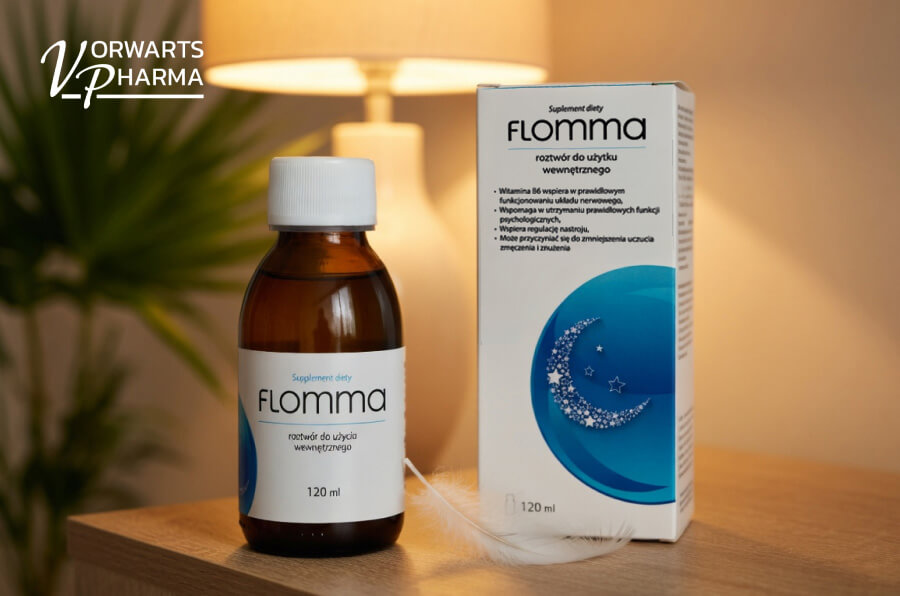
Flomma – Support for Sleep Quality and Emotional Well-Being
If natural methods are not enough and stress remains a constant background factor, Flomma may be worth considering.
Flomma contains two active ingredients:
- Lactium® HD4 (milk protein hydrolysate) – helps improve sleep quality, supports stress reduction, and contributes to lowering cortisol levels during stressful situations.
- Vitamin B6 (pyridoxine) – supports the normal functioning of the nervous system, helps reduce tiredness and fatigue, and contributes to the regulation of hormonal activity.
Important: Flomma does not cause dependence, sedation, drowsiness, or reduced concentration. It works through a gentle physiological mechanism. It is suitable for people with lactose intolerance, as it contains less than 1% lactose.
The supplement supports a broad range of psycho-emotional benefits, including reduced emotional tension, faster sleep onset, and maintained concentration throughout the day.
Learn more about Flomma:
https://vorwartspharma.pl/en/flomma-for-sleep-and-stress-reduction-a-new-product-from-vorwarts-pharma/
FAQ
What should I do if my sleep schedule is disrupted and I cannot fall asleep before 2 a.m.?
Gradually move your wake-up time 30 minutes earlier each day, avoid compensating with daytime naps, and maintain a consistent schedule. Within 5–10 days, your circadian rhythm should begin shifting in the desired direction.
Does physical activity help with stress-related insomnia?
Yes. Aerobic exercise lowers cortisol levels and improves deep sleep quality. The best time is in the morning or daytime. Intense evening workouts may have the opposite effect.
What is Flomma and what does it contain?
Flomma is a dietary supplement containing Lactium® HD4 (milk protein hydrolysate) and vitamin B6. Lactium® helps improve sleep quality and reduce stress levels, while vitamin B6 supports normal nervous system function and helps reduce fatigue. It does not cause dependence, drowsiness, or sedation.
How should Flomma be taken for sleep disturbances caused by stress?
Please refer to the Flomma product page or the package leaflet for instructions on use and dosage.
See also


111


