

Newborn gut microbiota: how it develops in the first months of life
Date: 18.02.2026
The gut microbiota of a newborn begins to form immediately after birth and changes dynamically during the first three months of life. This period lays the foundation of the child’s microbiome — the community of bacteria inhabiting the digestive tract. When does it stabilize, what affects its composition, and is infant discomfort normal? Let’s take a closer look.
What is newborn gut microbiota?
Newborn gut microbiota refers to the intestinal bacteria in infants that gradually colonize the digestive system after birth.
In the first days of life, a baby’s intestines are almost sterile. Microorganisms then enter from the surrounding environment, through contact with the mother, and during feeding.
By the age of one, the newborn’s microbiome becomes more stable and gradually resembles that of an adult.
How does gut microbiota develop in infants?
The process occurs in several stages:
- Birth.The mode of delivery influences the initial bacterial composition.
- First weeks of life.Feeding type plays a key role in shaping the gut microbiota.
- First 3 months.Active colonization of the gut by different bacterial species occurs. This period is most often associated with functional discomfort.
When does newborn gut microbiota form?
Most intensively during the first 3 months of life, with stabilization continuing up to one year.
What influences the development of the newborn microbiome?
Key factors include:
- mode of delivery
- feeding type
- contact with parents
- environment
These factors determine which gut bacteria dominate during the first months.
Interesting fact: during the first weeks, the composition of microbiota may change almost daily. This is a natural adaptation process.
Why are the first months so sensitive?
The first three months represent a period of active adaptation. The digestive system is still developing, and the gut microbiota is only beginning to form. The body gradually “gets acquainted” with bacteria colonizing the intestines, which does not happen overnight.
During the first weeks, the newborn microbiome is unstable. The number and types of bacteria may change even within a few days. This is why parents may notice bloating, gas, or periodic restlessness after feeding. These symptoms are linked not to a single cause but to ongoing microbiota development.
Additionally, the enzyme system actively matures. The digestive tract learns to function independently, and any changes — feeding schedule, new formulas, or environment — may influence gut balance.
Is discomfort normal in the first months?
Yes. The newborn’s gut microbiota is not yet stabilized, and the body is undergoing a natural adaptation process.
That is why parents often pay special attention to nutrition and consider dietary supplements appropriate for early infancy, following usage recommendations.
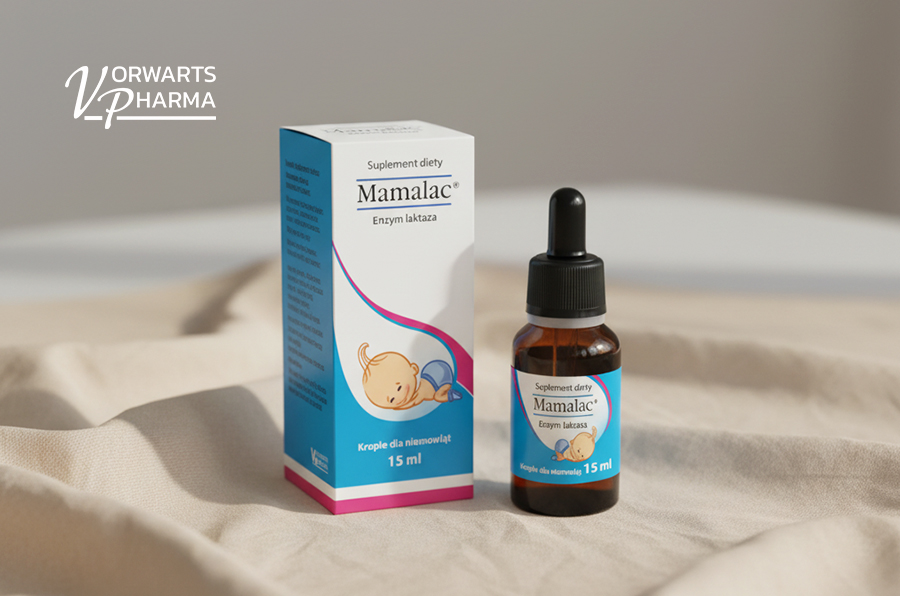
Mamalac dietary supplement for colic
Mamalac contains highly purified lactase enzyme that breaks down lactose from breast milk or formula, preventing fermentation and reducing gas, bloating, and colic.
Mamalac addresses the main cause of infant colic, supports digestion, and helps healthy weight gain.
More details:https://vorwartspharma.pl/en/product/mamalac-2/
FAQ: newborn gut microbiota
Is a baby born with a fully developed microbiota?
No. Gut colonization begins after birth.
How long does gut microbiota develop?
The most intensive period is the first 3 months. Stabilization continues up to one year.
Does feeding type influence the microbiome?
Yes, it plays a significant role.
Why does discomfort appear in the first months?
The digestive system is adapting, and the microbiota is still forming.
Newborn gut microbiota develops naturally and gradually. Understanding this process helps parents better support their child’s development and daily comfort.
Company information:https://vorwartspharma.com/en
111


