

What Helps with Infant Colic?
Date: 19.06.2026

Unexplained crying is one of the biggest sources of concern for parents during the first months of a baby’s life. Let’s explore why this condition occurs and which approaches can genuinely help improve a baby’s comfort.
Why Does Colic Occur in Infants?
The most common cause is a temporary physiological deficiency of the enzyme lactase. Lactase breaks down lactose (milk sugar) into glucose and galactose. When there is not enough lactase, some of the lactose is fermented by intestinal microflora, leading to gas formation, stretching of the intestinal walls, and abdominal discomfort.
Other contributing factors include immature gut microbiota, swallowing air during feeding, overfeeding, or improper breastfeeding latch.
How Can You Tell If Your Baby Has Colic?
Typical signs include sudden episodes of prolonged crying, most often in the evening; pulling the legs toward the abdomen; and facial redness during crying. An episode may last from 30 minutes to 2–3 hours and usually resolves on its own.
The condition typically begins at 2–3 weeks of age, peaks during the second month, and gradually disappears by 3–4 months as the digestive system matures.
What Helps with Infant Colic?
Approaches to relieving colic can generally be divided into two categories: physical methods and measures that support lactose digestion.
Physical Methods
- Applying warmth to the baby’s tummy (skin-to-skin contact or a warm cloth)
- Gentle clockwise abdominal massage
- Tummy time between feedings
- Holding the baby upright for 10–15 minutes after feeding to promote burping
Feeding Adjustments
Ensure proper breastfeeding latch to reduce air swallowing and avoid overfeeding. For formula-fed infants, consider bottles with anti-colic valves.
Supporting Lactose Digestion
Since most cases are associated with temporary lactase deficiency, a logical solution is providing an additional source of this enzyme. It helps break down milk or formula before fermentation begins in the intestines.
| Method | What It Affects | Key Feature |
| Warmth, massage, positioning | Relief during an episode | Temporary effect |
| Feeding adjustments | Reduced air swallowing | Preventive approach |
| Enzyme support | Lactose breakdown | Addresses the underlying cause |
Mamalac — A Source of Lactase for Infants from the First Days of Life
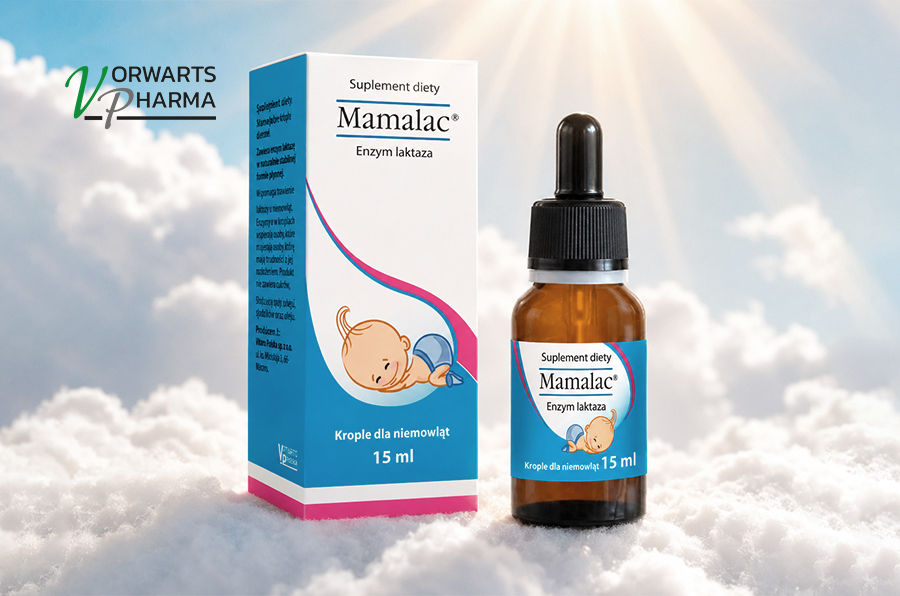
Mamalac is a dietary supplement containing a highly purified plant-derived lactase enzyme. It helps break down milk or infant formula into glucose and galactose before lactose reaches the large intestine and begins to ferment.
Mamalac is available in drop form. A 15 ml bottle provides approximately 37 servings. The drops are added to expressed breast milk or formula before each feeding according to the dosage instructions on the package.
The enzyme is resistant to the acidic environment of the stomach, allowing it to remain active even when pH levels fluctuate.
More information about the dosing regimen can be found on the Mamalac product page.
Frequently Asked Questions
How Long Does Infant Colic Last?
An episode usually lasts from 30 minutes to 2–3 hours and may occur daily, most often in the evening, until the baby reaches 3–4 months of age.
Does Colic Go Away on Its Own?
Yes. In most infants, colic resolves naturally as the digestive system matures and natural lactase production normalizes.
What Is Mamalac and What Does It Contain?
Mamalac is a dietary supplement containing an active plant-derived lactase enzyme, intended for children from the first days of life. It is available as 15 ml drops that can be added to breast milk or infant formula. For detailed information on ingredients and dosage, please refer to the Mamalac product page.
See also



111


