

What to Know About the First Months of a Newborn’s Life
Date: 12.12.2025
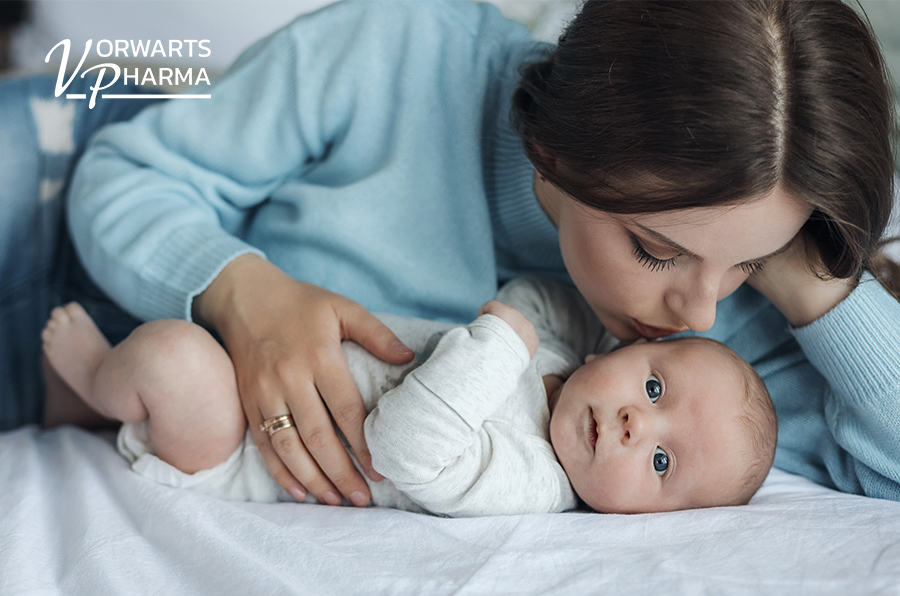
The first weeks after birth are a period when the baby is just beginning to interact with the world. A newborn reacts to familiar voices, feels touch, and sees most clearly at a distance of about 20–30 cm — the natural position of a parent’s face when holding the baby. Interestingly, during this time babies distinguish high-contrast contours better, so they carefully study adult facial features.
For parents, these months bring new habits, new routines, and the search for what makes each day calmer.
Development and Behavior in the First Three Months
1st month
The baby sleeps a lot and reacts to voices, light, and movement. Eye contact appears briefly, but familiar intonations immediately attract attention.
2nd month
The first smiles appear, wakeful periods get longer. The baby moves arms actively, maintains eye contact longer, and listens attentively to adults.
3rd month
The baby starts cooing, tries to hold their head, and observes surrounding objects with more focus.
Parents at this stage often look for products that may become part of daily routines.
One available option is the dietary supplement Mamalac, which contains the enzyme lactase. Product information is available at:https://vorwartspharma.pl/en/product/mamalac-2/.
What Is Lactase?
Lactase is an enzyme naturally produced in the small intestine. It helps break down lactose — milk sugar.
When lactase is insufficient, lactose is not fully digested, which may lead to tummy discomfort in infants.
This is why parents often pay attention to products that provide lactase.

Typical Development Signs
| Age | What Parents Notice |
| 1 month | short active periods, reaction to voices |
| 2 months | smiles, active movements |
| 3 months | cooing, attempts to hold the head |
How to Make the First Months More Comfortable
Step 1. Establish simple rituals
Create a few daily actions that occur at roughly the same time: a lullaby, a calm walk, a gentle massage. Small rituals help the baby feel stability.
Step 2. Observe the baby’s signals
Watch the eyes, hand movements, facial expressions, and breathing changes. These small cues show when the baby wants to eat, rest, or needs closeness.
Step 3. Reduce overstimulation
Use dim light, moderate sounds, and a gentle home rhythm. Too many stimuli can overwhelm a newborn. A calmer environment eases adaptation.
Step 4. Hold the baby when it feels right for both of you
Touch is one of the first forms of communication. Warm hands, a familiar voice, and an adult’s breathing rhythm help the baby feel safe.
Step 5. Take care of your own balance
Parents’ emotional state sets the tone at home. Even short breaks help restore energy and make the environment more stable for the baby.
FAQ — Common Questions
When does the first smile appear?
Most often between weeks 4 and 8.
Why can’t a newborn see far?
Because the optimal focus distance in the first months is 20–30 cm.
How much does a newborn sleep?
A lot, in short cycles — this is normal adaptation.
Is a strict schedule necessary?
No, gentle routine repetition is enough.
Is holding the baby important?
Yes, it builds connection and helps the baby feel secure.
More about the company’s products:https://vorwartspharma.pl/en/#homeproduct
111


