

Dry Nose: Causes and How to Moisturize the Nasal Mucosa
Date: 16.07.2026

Dryness in the nose is one of the most common complaints during the heating season and after prolonged exposure to air-conditioned environments. As the nasal mucosa loses moisture, you may experience a feeling of tightness, itching, and sometimes even small cracks and crusts.
Why Does Nasal Dryness Occur?
The nasal mucosa is constantly moisturized by its natural secretions, which help retain warmth and trap dust and microorganisms. When this balance is disrupted, the sensation of dryness develops.
| Cause | What Happens |
| Dry air (heating or air conditioning) | Indoor humidity decreases, causing the mucosa to dry out |
| Prolonged use of decongestant nasal drops | The mucosa loses its natural protective layer |
| Allergic rhinitis | Irritation and inflammation of the nasal mucosa |
| Inadequate fluid intake | General dehydration affects the mucous membranes |
| Working in dusty or smoky environments | Mechanical irritation and drying of the tissues |
| Age-related changes | Reduced activity of mucus-producing glands |
Symptoms Associated with Dry Nasal Mucosa
People commonly experience:
- Tightness and itching inside the nasal passages.
- Formation of crusts.
- Occasional mild irritation when the mucosa becomes excessively dry.
- Nasal congestion that tends to worsen at night.
- A sensation of “sand” inside the nose.
How to Moisturize the Nasal Mucosa: Practical Tips
What does moisturizing the nasal mucosa mean, and why is it important? It helps restore the natural moisture balance of the nasal tissues, allowing the mucosa to perform its protective barrier function by trapping dust and microorganisms while warming inhaled air.
Main recommendations:
- Maintain indoor humidity between 40% and 60%.
- Ventilate your room several times a day.
- Drink enough fluids throughout the day.
- Use saline solutions or specialized nasal sprays.
- Avoid prolonged, unsupervised use of decongestant nasal drops.
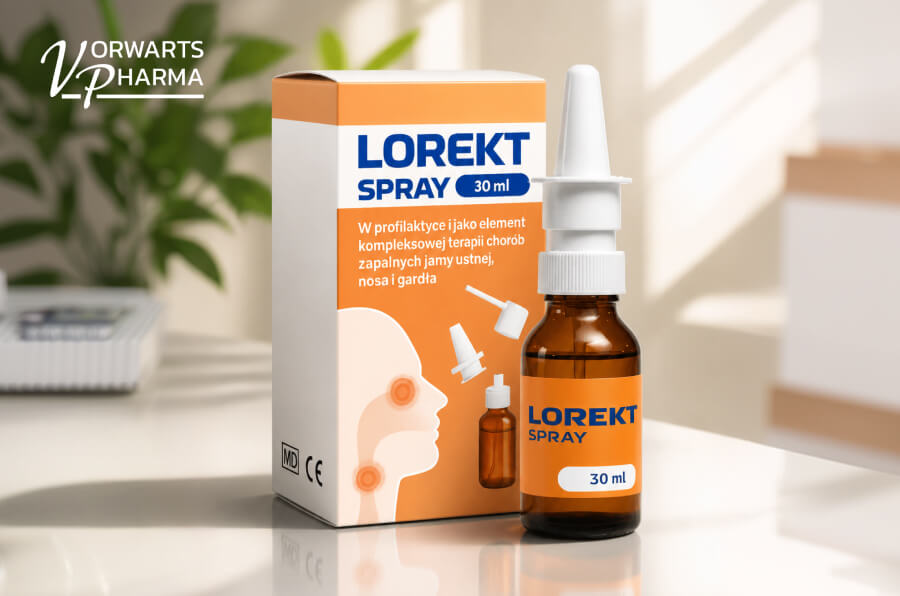
Moisturizing the Nasal Mucosa with Lorekt
If nasal dryness occurs regularly, it may be worth considering specialized products designed to care for the nasal mucosa. Lorekt is a nasal and throat spray containing the natural ingredient Ectericide® (an oxidized fish oil product) combined with an emulsion of vitamins A, E, and D₃.
Composition highlights:
- Ectericide® – a source of omega-3, omega-6, and omega-9 unsaturated fatty acids.
- Vitamins A, E, and D₃ in an emulsion formulation.
Thanks to this composition, Lorekt helps soften and moisturize the nasal and throat mucosa while assisting in the gentle removal of crusts without damaging the tissues. The spray contains no alcohol or essential oils, so it does not further dry the mucosa and is suitable for children from 1 year of age.
Two interchangeable nozzles with micro-droplet spray technology ensure even distribution over the nasal and throat mucosa. For more information about the composition and directions for use, please refer to the Lorekt product page.
When Should You See a Doctor?
If nasal dryness is accompanied by recurrent nosebleeds, persistent congestion, pain, or does not improve despite home care, you should consult an otolaryngologist (ENT specialist) to determine the underlying cause.
FAQ
Why does my nose constantly feel dry?The most common causes are dry indoor air, prolonged use of decongestant nasal drops, or insufficient fluid intake.
How can I quickly moisturize my nose at home?Ventilating the room, using a humidifier, drinking enough water, and applying saline nasal sprays can help restore moisture and comfort.
What is Lorekt and what does it contain?Lorekt is a nasal and throat spray containing the natural ingredient Ectericide® (an oxidized fish oil product rich in omega-3, omega-6, and omega-9 fatty acids) together with an emulsion of vitamins A, E, and D₃. More information is available on the Lorekt product page.
Can nasal moisturizing products be used every day?Yes. Saline solutions and specialized nasal sprays are intended for regular care of the nasal mucosa and, when used as directed, do not cause dependence.
111


