

Why Does a Child Breathe Through the Mouth During Sleep and Wake Up With a Dry Throat?
Date: 16.09.2026
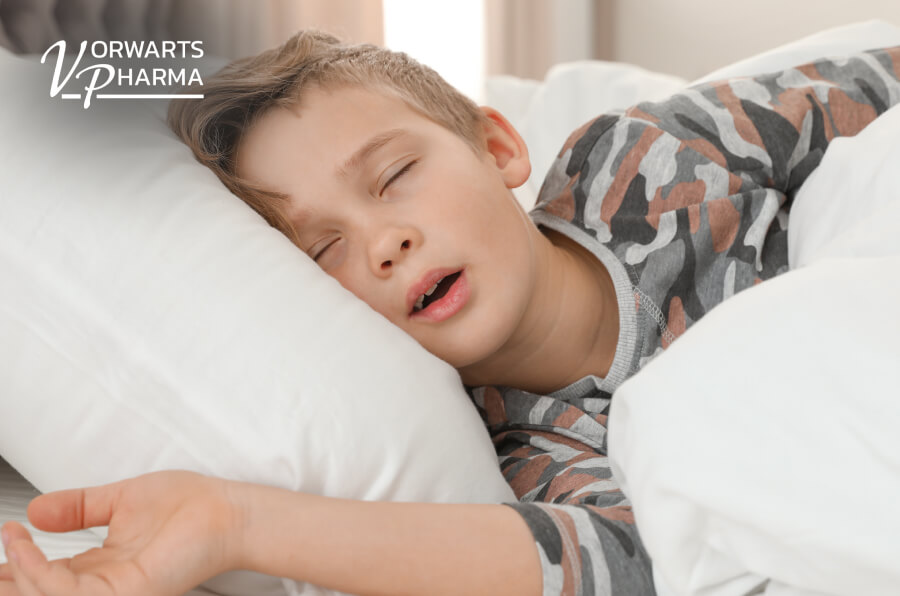
A child falls asleep, but their mouth stays open. In the morning, they immediately ask for water, complain about a dry throat, or spend a few minutes clearing their throat after waking up. Parents often notice this during a cold, a runny nose or the heating season.
If your child breathes through the mouth at night, two things are worth checking first: whether they can breathe freely through the nose and what the air is like in the bedroom. When nasal breathing becomes difficult, a child naturally starts using their mouth more. Air then passes directly through the mouth and throat, so dryness may be more noticeable in the morning.
Why Does My Child Sleep With Their Mouth Open?
Parents usually start wondering why their child sleeps with their mouth open when it happens night after night. During a cold, the explanation may be fairly obvious: the nose is blocked, so the child opens their mouth while sleeping.
But when the runny nose is gone and mouth breathing during sleep continues, it is worth paying closer attention.
Possible reasons include:
- nasal congestion in children;
- swelling of the nasal mucosa;
- a persistent runny nose;
- sensitivity to dust, pollen or other environmental factors;
- enlarged adenoids;
- enlarged tonsils;
- structural features of the nasal passages;
- a habit of mouth breathing that remains after a long period of nasal congestion.
Enlarged adenoids in children are also commonly associated with difficulty breathing through the nose. They are especially worth discussing with a doctor when mouth breathing is accompanied by snoring in a child, restless sleep or an open mouth during the day as well.
Why Does a Child Have a Dry Throat in the Morning?
When we breathe through the nose, the incoming air passes through the nasal passages, where it is warmed and humidified. If a child spends several hours breathing through the mouth while sleeping, the air comes into direct contact with the lining of the mouth and throat.
This is why a dry throat in the morning can feel much more noticeable after a night of sleeping with the mouth open.
The bedroom environment matters too. Heating and air conditioning can reduce indoor humidity, especially when they are used for many hours. You can read more about this in the article “How Dry Air Affects the Nasal and Throat Mucosa”.
| What have you noticed? | What is worth checking? |
| Child sleeps with mouth open | Whether they breathe freely through the nose |
| Child snores at night | How often the snoring occurs |
| Dry throat in the morning | Mouth breathing and bedroom humidity |
| Child has a blocked nose | Whether congestion is also present during the day |
| Dryness in the nose | Heating, air conditioning and dry indoor air |
| Restless sleep | Frequent waking, snoring and breathing pattern |
What to Do if Your Child Breathes Through the Mouth at Night
Start by watching what happens during the day as well as at night. Does your child normally breathe through the nose while playing? Is there a runny or blocked nose? Does the child snore during sleep? Does mouth breathing happen every night or mainly during a cold?
It is also useful to check the temperature and humidity in the bedroom and air the room before sleep.
If the child also experiences nasal dryness, it may help to pay closer attention to the indoor environment and regular nasal mucosa care. More information can be found in the article “Why the Nasal and Throat Mucosa Dries Out Faster Than It Seems”.
If your child constantly breathes through the mouth, regularly snores, continues mouth breathing during the day or has persistent nasal congestion, it is worth discussing the cause with a pediatrician or pediatric ENT specialist.

Lorekt for Daily Care of the Nasal and Throat Mucosa
When indoor air is dry or the nasal mucosa tends to lose moisture regularly, extra attention can be given to moisturizing and everyday mucosal care.
Lorekt by Vorwarts Pharma is designed for the care of the nasal and throat mucosa. It comes with two separate nozzles, making it convenient to use for the nose and throat according to the instructions.
More information about its composition and directions for use is available on the Lorekt product page.
FAQ
Why does my child sleep with their mouth open?
A child may sleep with an open mouth when breathing through the nose becomes difficult. Possible reasons include a runny nose, nasal congestion, swelling of the nasal mucosa, enlarged adenoids or other factors that affect nasal airflow.
Why does my child snore and breathe through the mouth?
Snoring and mouth breathing in children can occur together when nasal breathing is restricted. If this happens frequently, it is worth discussing the symptoms with a healthcare professional.
Why does my child wake up with a dry throat?
Sleeping with the mouth open is one possible reason. Dry indoor air may make the feeling of dryness more noticeable after waking up.
Can enlarged adenoids cause mouth breathing in children?
Yes. Enlarged adenoids, also known as adenoid hypertrophy, can make nasal breathing more difficult. A child may then breathe through the mouth more often, particularly during sleep.
What are the signs of enlarged adenoids in children?
Possible signs may include mouth breathing, sleeping with the mouth open, snoring, persistent nasal congestion and restless sleep. A single symptom, however, does not identify the cause on its own.
When should I see a doctor?
It is worth consulting a pediatrician or pediatric ENT specialist if your child regularly sleeps with their mouth open, snores frequently, breathes through the mouth during the day or has persistent difficulty breathing through the nose.
Mouth breathing at night does not always have the same cause. Sometimes it appears only during a cold or a short period of nasal congestion. In other cases, it makes sense to look more closely at nasal breathing, snoring and bedroom humidity. If sleeping with an open mouth becomes a regular pattern, it should not be dismissed as just a habit.
111


